Kazakh Grain Heads East: What the First Two Months of the 2026/27 Season Show
05.11.2026
Kazakhstan shipped 2.26 million tonnes of new-crop grain in September and October. Here is what sits behind the numbers, and how to turn a line in the statistics into cargo you can actually receive.
A season that opened in the green
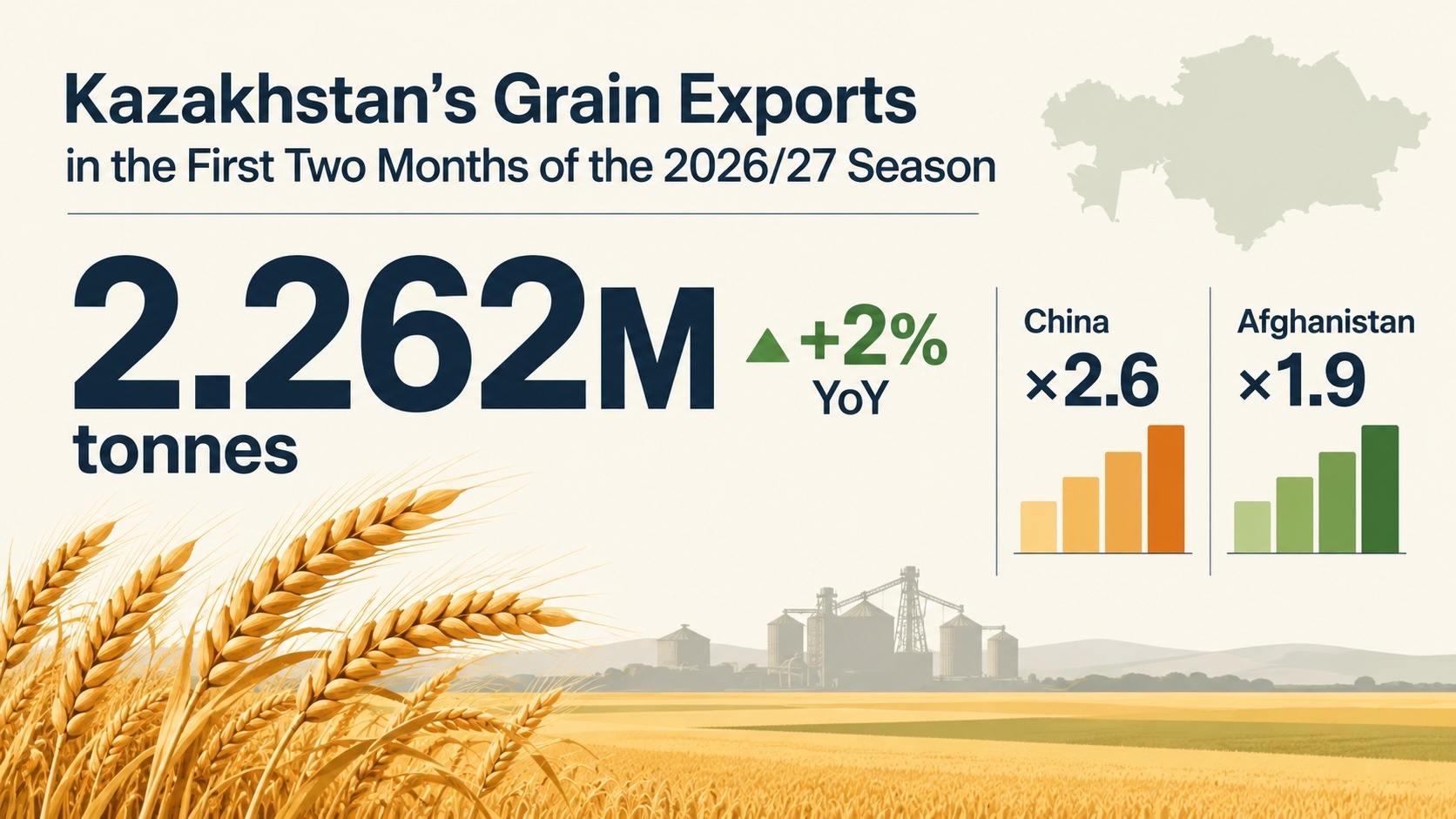
According to Kazakhstan’s Ministry of Agriculture, exports over the first two months reached 2.262 million tonnes, up 2% on last year’s 2.219 million. Traditional buyers took 1.43 million tonnes (+1.2%); most of the growth came from newer destinations.
For buyers, the message is twofold: more places to source from, and a higher price for picking the wrong exporter.
Five things every buyer should factor in
1. Central Asia is the bedrock
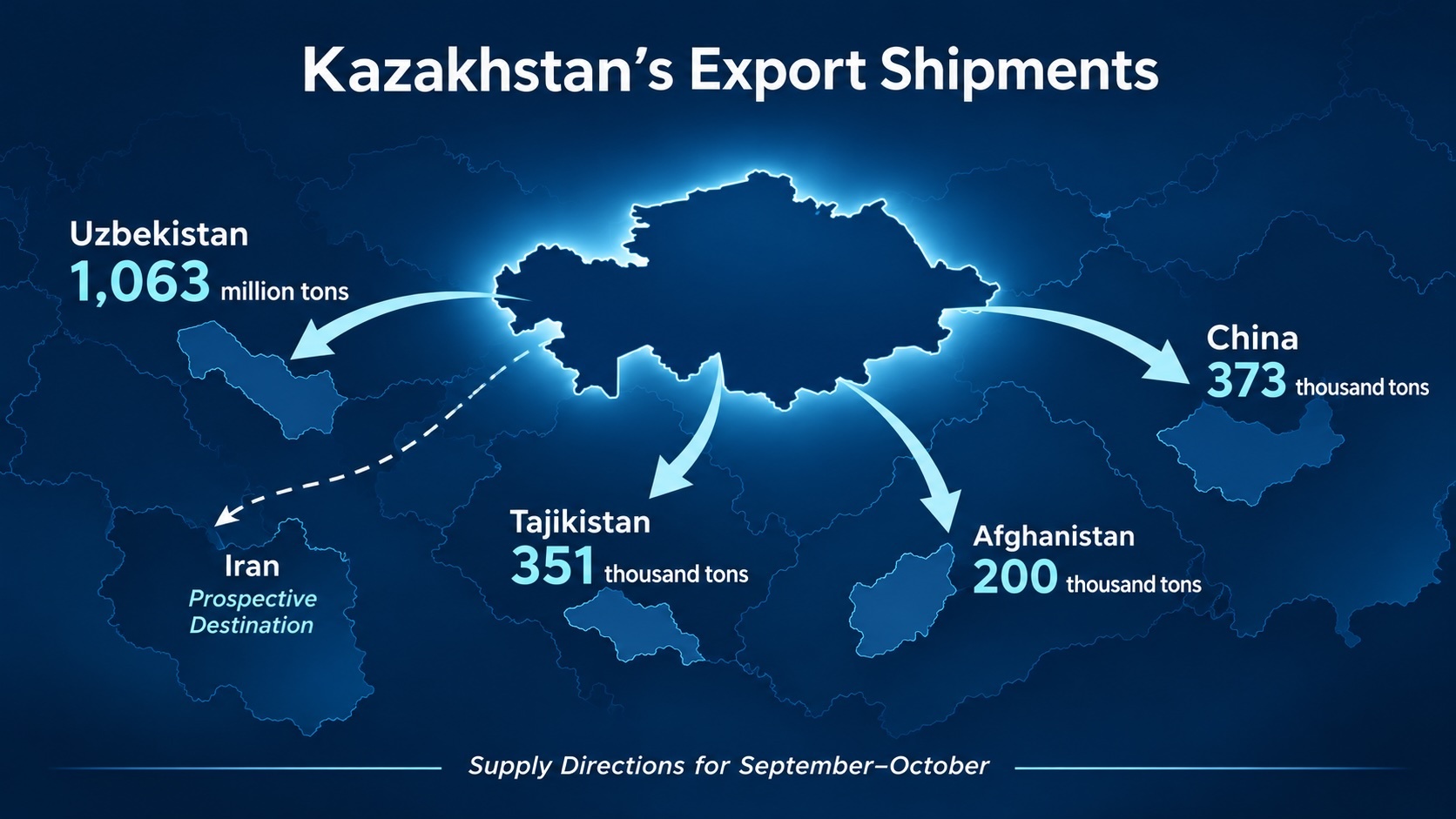
Uzbekistan and Tajikistan have anchored Kazakh grain exports for several seasons. Short distances, proven routes and steady demand make this the most predictable lane. Wheat shows the scale: from January to September, Uzbekistan imported 3.8 million tonnes (+49%) and Tajikistan 1 million (+13.6%).
What to do: book the grade and timing you need early. On the familiar routes, buyers are competing for available volumes.
2. China: a low base, but a steady trend
373,000 tonnes against 145,000 a year earlier. The start is modest, the direction is not: Beijing keeps spreading its import sources, and Kazakhstan is taking a bigger slice of that plan.
3. Afghanistan is the second growth engine
Grain shipments rose 1.9x to 200,000 tonnes, and wheat from January to September jumped 3.4x to 663,000 tonnes. For exporters, a reason to look beyond Central Asia. For importers, proof that demand for Kazakh grain rests on several markets, not one.
What to do: on newer routes, pin down phytosanitary rules, payment procedures, paperwork and acceptance terms before you sign. Afterwards it is too late to ask.
4. Iran: big potential, small volumes
Between January and September, Kazakhstan sent Iran just 67,000 tonnes of wheat. Yet in June 2025, Agriculture Minister Aidarbek Saparov set out targets: up to 2 million tonnes of wheat and 1 million tonnes of barley a year. Nothing in 2026 has confirmed or revised that target.
A target is not a delivery schedule. It only turns real where demand, commercial agreements and working payment channels line up.
What to do: before signing, check sanctions exposure, which banks are acceptable and how payments will actually move.
5. Two datasets, two different stories
Grain shipments for September–October and wheat exports for January–September cover different periods and different product lines. Add seasonality, the grade of a specific lot and what is physically available today, and you have the factors that decide a deal far more than any headline number.
Checklist: from statistics to shipment
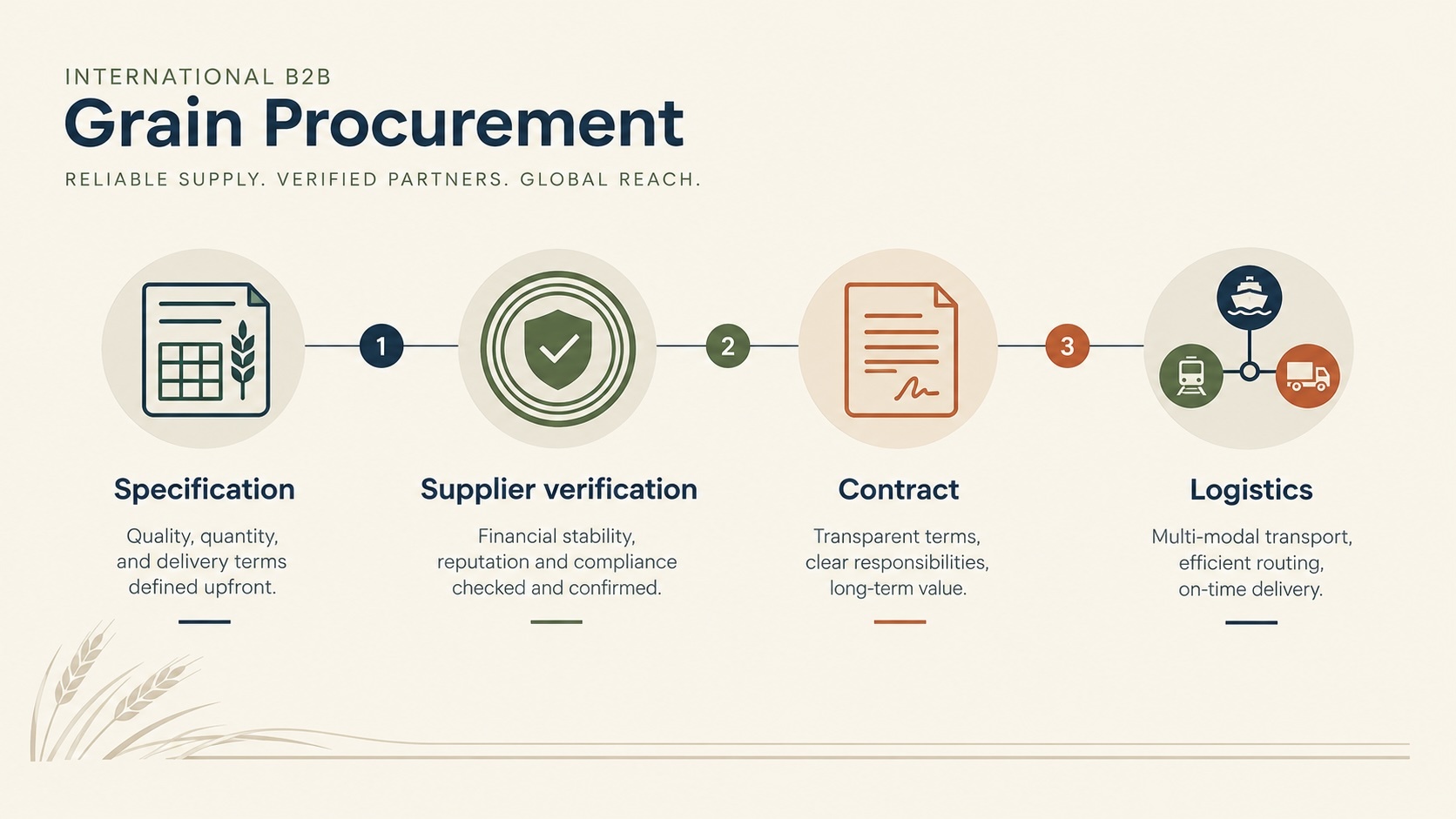
- Specification. Crop, grade, moisture, protein, test weight: all fixed before the contract. “Good quality” is not a specification.
- Supplier. Legal status, commercial capacity, signatory authority, origin of the goods. Ask for documents before you sign, not after the first dispute.
- Contract. Volume, price, payment, timing, acceptance, document set, liability. Whatever is not written down gets decided by default, not by your plan.
- Logistics. Agree the route, timing and transport requirements before the deal is confirmed. This is where “the grain exists” most often becomes “the grain was late”.
How Oakmont Solutions makes sourcing manageable
Oakmont Solutions works in international B2B trade and logistics. Finding an exporter, vetting it, agreeing specifications, organising transport: each takes time, and across jurisdictions and languages it also takes coordination. We handle that. Depending on the model we agree with you, support can include:
- Opportunity search. Suppliers and sourcing routes matched to your quality and volume requirements.
- Coordination between parties. Business communication, terms discussion, alignment on deal parameters.
- Contract support. Commercial terms, specifications, deadlines, areas of responsibility.
- Logistics coordination. Transport, timing and documentation within the agreed model.
- Long-term relationships. Regular cooperation between importers and exporters instead of one-off deals.
The result for an importer: a clear process instead of scattered negotiations, a lighter administrative load and more time for core business. The exact scope of services and each party’s responsibility are set out in an individual agreement. Our support does not replace legal, financial or compliance checks of counterparties.
The bottom line
Kazakhstan holds its lead in Central Asia, is growing in China and Afghanistan, and is eyeing Iran. Wheat exports over nine months rose 15%, to 6.1 million tonnes from 5.3 million. For importers, that is a solid reason to put Kazakhstan on the list of diversification sources. The formula for a good deal stays the same: a vetted partner, a precise specification, a sound contract and agreed logistics.
Planning to buy Kazakh grain? Get in touch with Oakmont Solutions and we will look at your case and suggest a support model.
FAQ
How much grain did Kazakhstan export in September–October 2026?
2.262 million tonnes of new-crop grain, 2% more than a year earlier.
Who are the biggest buyers of Kazakh wheat?
January–September 2026: Uzbekistan 3.8 million tonnes, Tajikistan 1 million, Afghanistan 663,000.
How much did exports to China grow?
2.6x, from 145,000 to 373,000 tonnes in September–October.
What is Kazakhstan’s potential in Iran?
The June 2025 targets, not confirmed in 2026, are 2 million tonnes of wheat and 1 million tonnes of barley a year. Actual January–September 2026 wheat shipments were 67,000 tonnes.
Data source: Ministry of Agriculture of the Republic of Kazakhstan.
