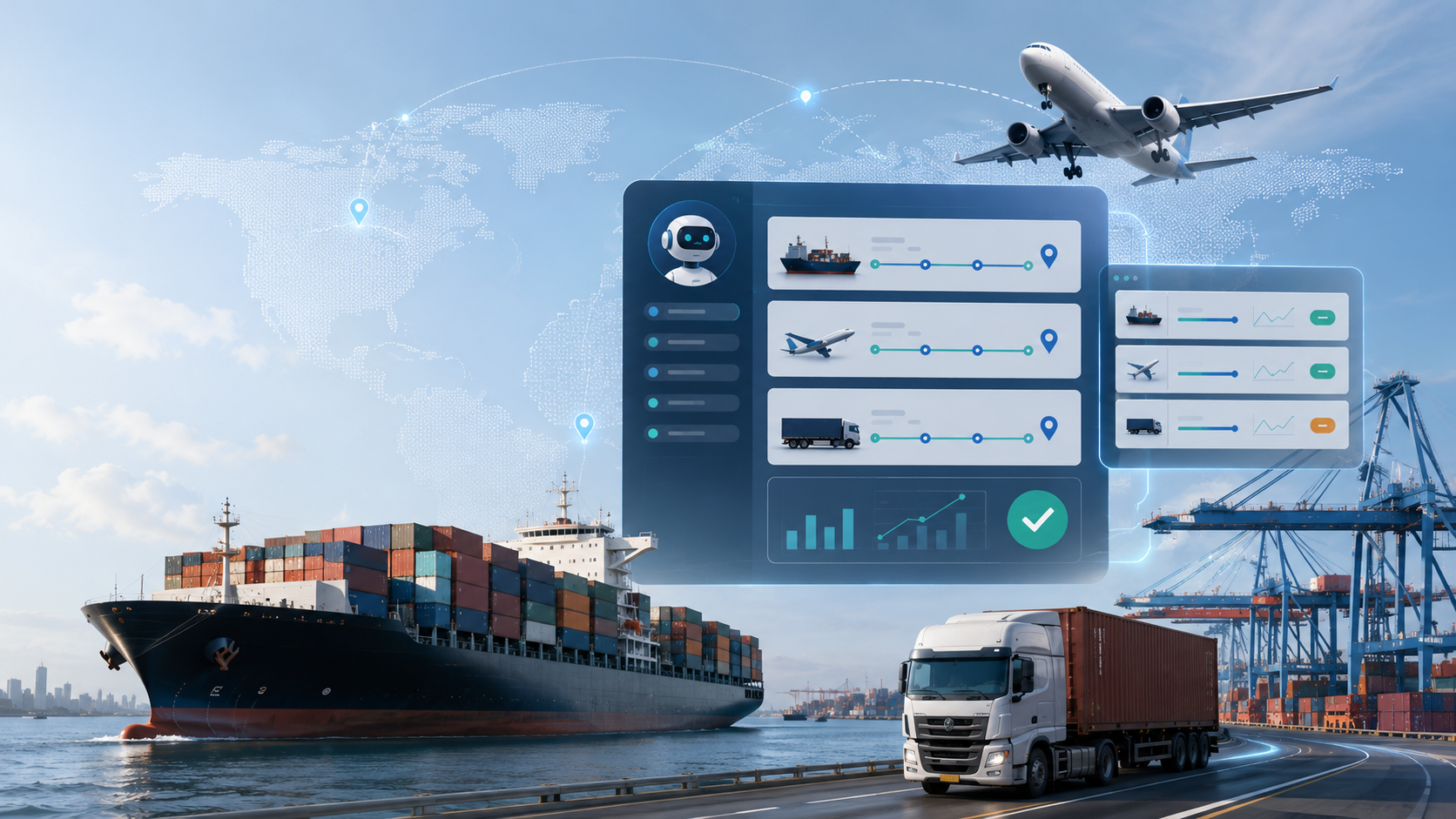
Flexport MCP: How AI Agents Are Automating Freight Booking
Flexport has launched an MCP server that connects AI assistants to a company’s account, enabling them to track shipments, search freight rates, and place bookings. For Oakmont Solutions and its audience in B2B trade and logistics, this is a timely example of AI agents moving beyond answering questions to carrying out real business operations.
What Flexport MCP Can Do
MCP is a protocol that allows AI assistants to connect with external services. Flexport MCP works with Claude, ChatGPT, and Microsoft Copilot. Users can ask for a shipment’s status, check for potential delays, search for rates, and create bookings. The service supports rate searches for ocean FCL and LCL shipments, as well as air freigh.
When placing a booking, the agent checks the rate, route, and shipment details. If no suitable rate is available, it can request one from the Flexport team. The connection uses the permissions of the user’s Flexport account, and administrators can manage access.
What It Means for B2B Logistics
For importers, exporters, and logistics teams, the integration could reduce manual information searches and the need to switch between systems. Flexport’s fall release also included AI agents for handling rate requests and schedule changes.
Why Human Oversight Still Matters
Freight bookings involve costs and contractual commitments. Businesses should consider requiring human approval before an agent places a booking, limit its permissions, and verify shipment and route details. Flexport recommends requiring approval for actions that change data.
Bottom line: AI agents are beginning to execute logistics tasks, not just recommend actions. For B2B companies, the key question is which operations to automate—and where employee approval should remain mandatory.
