Biogas Without Waste: How Digestate and Biogenic CO₂ Open New Revenue Streams
03.11.2026
How RENURE, e-methane and CO₂ storage are reshaping biogas plant economics: a market update for November 2026
One biogas plant, three products
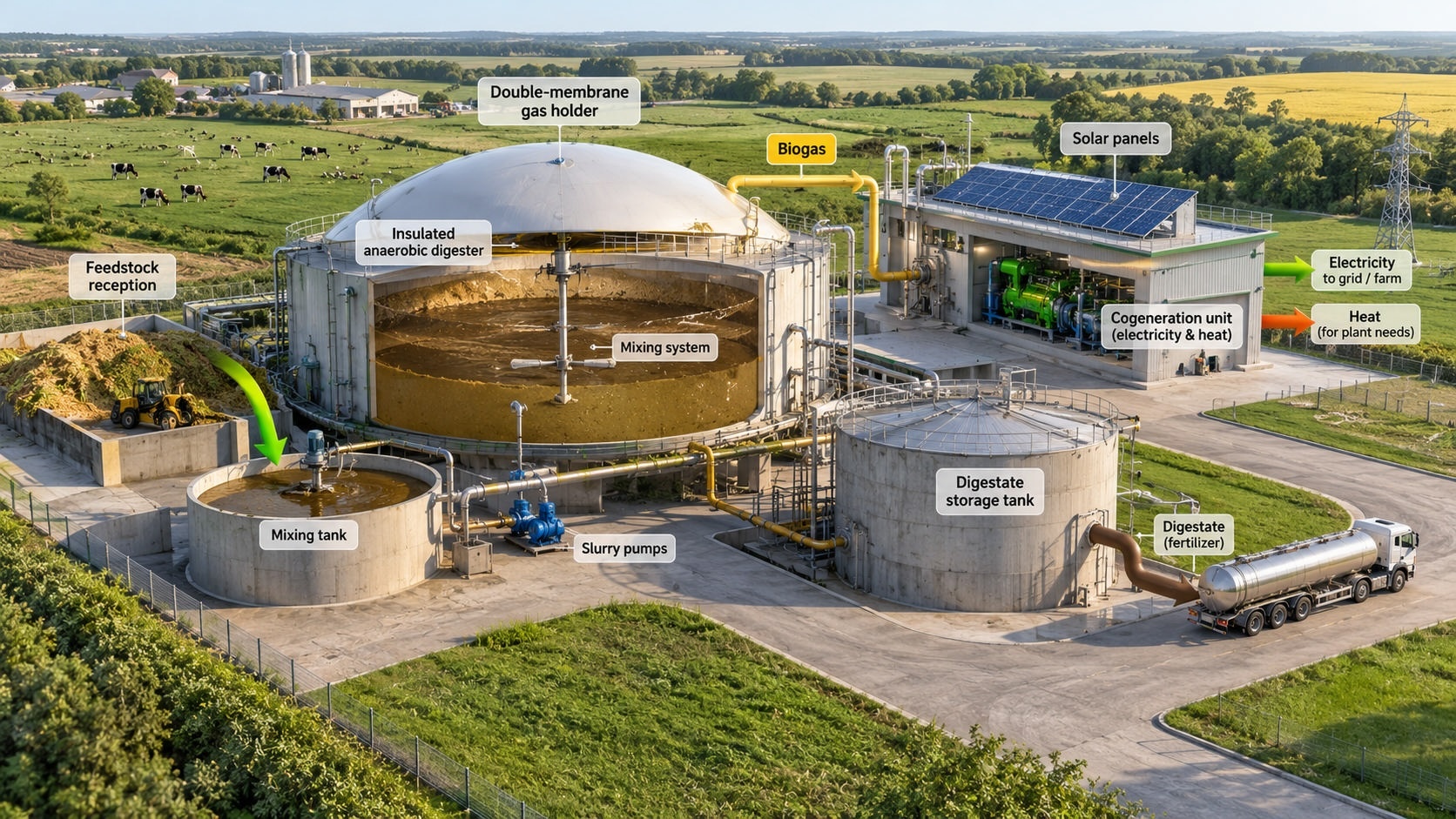
Biogas production is shifting toward a new business model. Besides biomethane, two by-products are gaining value: digestate and biogenic carbon dioxide.
Digestate can be used as fertiliser. CO₂ can serve as a feedstock for synthetic methane, or be stored underground for the long term.
For plant operators, that means new income streams without having to process more feedstock.
1. Digestate: from waste to fertiliser
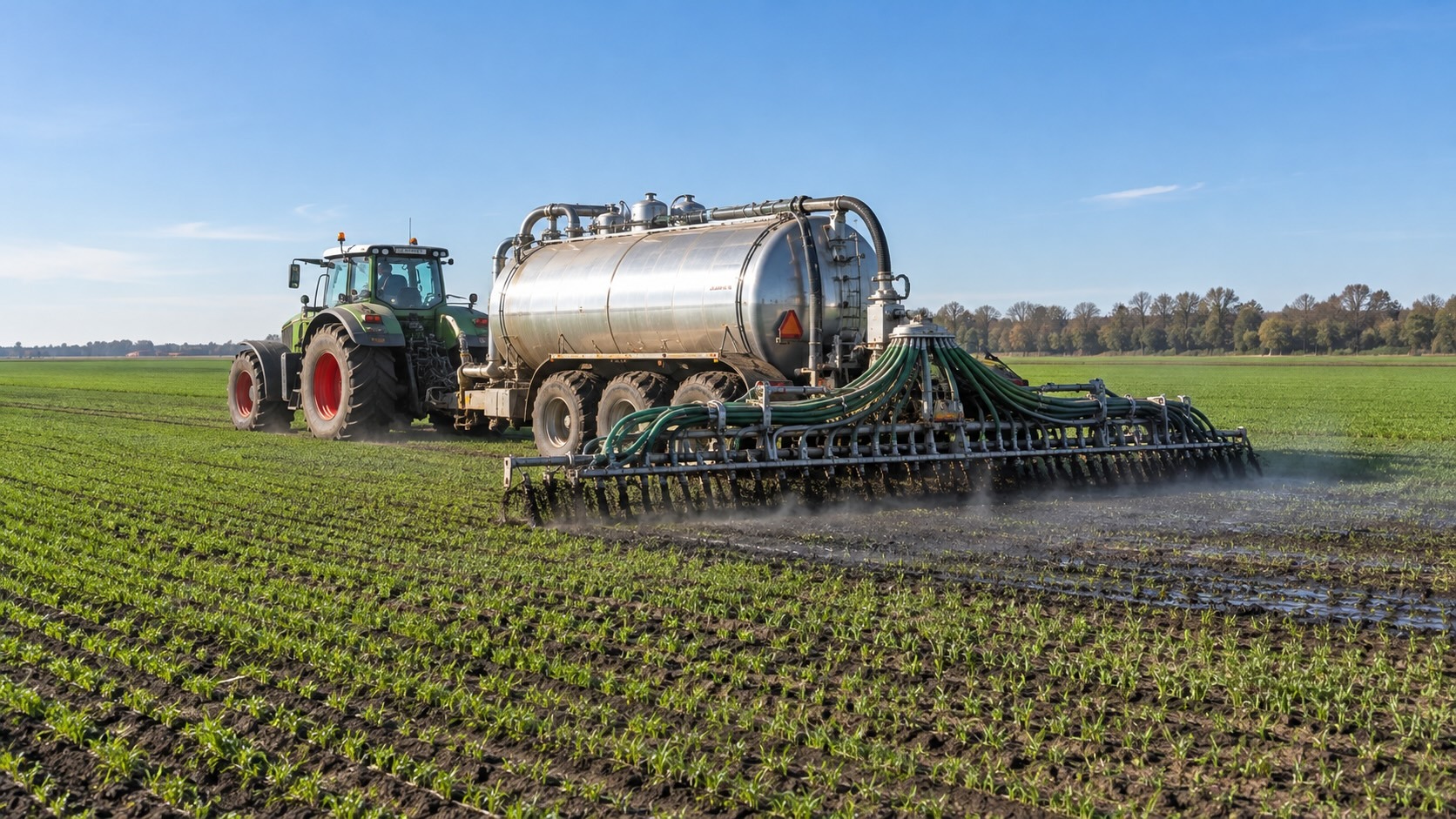
Digestate is what is left after manure, crop residues and food waste have been broken down in an oxygen-free digester. It contains nitrogen, phosphorus and potassium, the main nutrients crops need.
According to the European Biogas Association (EBA), digestate from European plants could in theory replace more than 16% of mineral nitrogen use, up to 30% of phosphorus and about 10% of potassium.
What stands in the way of commercial use?
The main obstacles are legal status and product quality. In most EU countries digestate is classed as waste, which limits how it can be used and adds permitting and storage costs.
Feedstock matters too. Digestate made from mixed industrial waste can contain heavy metals, pharmaceutical residues and other unwanted contaminants.
To reach the market, producers need to control their feedstock, separate the fractions, test nutrient content and check environmental safety.
Portugal offers an example. Order No. 5993/2025 of 28 May 2025 sets criteria under which certain types of digestate can be used as fertiliser.
RENURE: new rules for processed manure
On 9 February 2026 the European Commission adopted Directive (EU) 2026/288, which amends the EU Nitrates Directive. The Commission’s announcement has more detail.
The directive allows certain fertilising materials made from processed manure to be applied above the standard limit of 170 kg of nitrogen per hectare per year. For eligible materials, the extra allowance is up to 80 kg of nitrogen per hectare.
That does not mean any digestate automatically counts as RENURE. A material must meet quality and environmental criteria, and it is up to each EU member state whether to allow its use.
On 16 October the Commission presented a draft targeted amendment that would extend RENURE to some liquid digestate fractions made from manure. According to Eunews, the public consultation runs until 13 November 2026. After that, the Nitrates Committee has to give its opinion, and the European Parliament and the Council get three months to review the text (NIA Ecology, in Russian).
For biogas operators this is a clear signal: digestate separation and treatment could turn from a cost into a way to make a saleable product.
2. Biogenic CO₂: a feedstock for new industries
When biogas is upgraded to biomethane, the carbon dioxide is separated from the methane. This stream is called biogenic because its carbon was taken from the air by plants not long ago.
According to the EBA, about 125 European plants were already capturing a combined 1.17 million tonnes of biogenic CO₂ a year. By 2027 that could pass 2 million tonnes, the EBA forecasts.
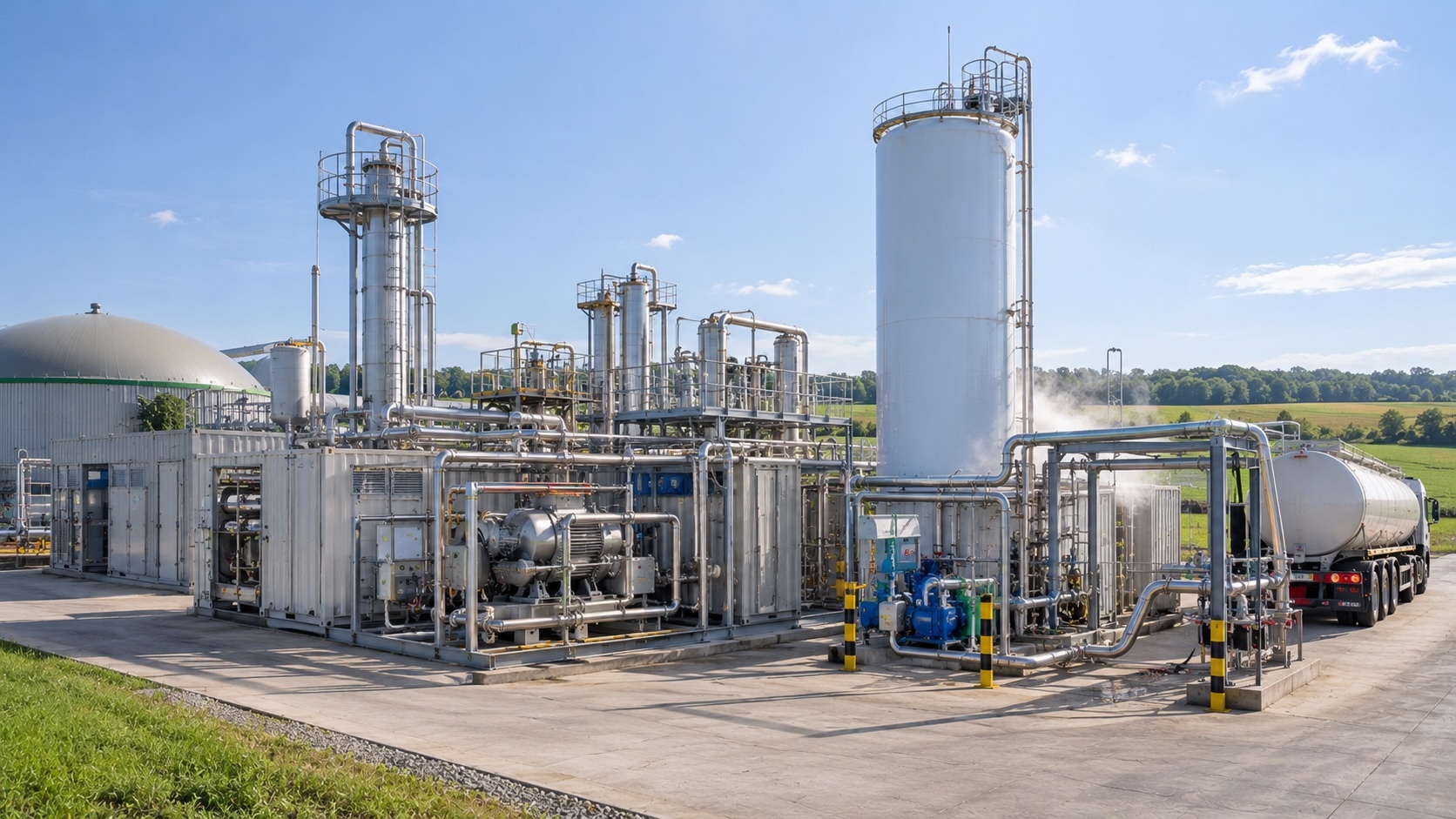
There are two promising ways to put it to use.
Storing CO₂: the Greensand project
On 18 September 2026 Denmark’s Greensand project, led by INEOS Energy, went into full-scale commercial operation.
The first phase is designed to store up to 400,000 tonnes of CO₂ a year, with room to grow to 4–8 million tonnes.
The CO₂ is liquefied, taken to the port of Esbjerg and shipped to the Nini West field in the North Sea. From there it is injected into a rock formation about 1,800 metres below the seabed.
Danish biomethane plants are among the sources of that CO₂ (Oilprice).
This approach is known as CCS (carbon capture and storage). The “carbon” here means carbon dioxide: it is separated from other gases, liquefied and injected underground.
For the biogas industry, it shows how CO₂ that is already separated during biomethane production can be sent for permanent storage.
Making e-methane
The other option is to turn biogenic CO₂ into synthetic methane.
This requires hydrogen made from renewable energy. In biological methanation, microorganisms convert hydrogen and carbon dioxide into methane and water (Enosis presentation):
CO₂ + 4H₂ → CH₄ + 2H₂O.
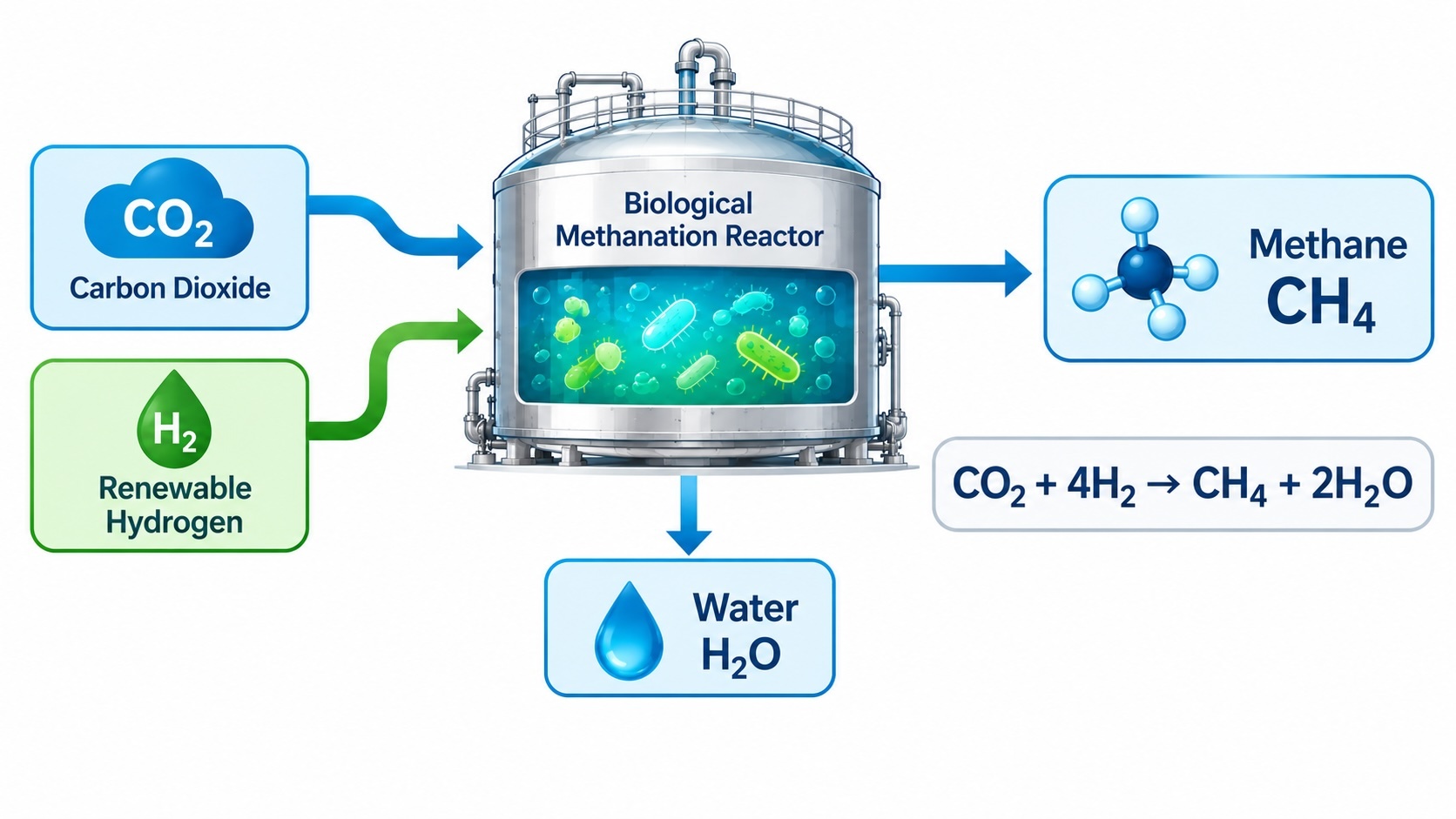
French company Enosis has received ISCC EU RFNBO certification to produce e-methane at its DENOBIO plant. It also works with ENGIE on sustainability proofs for the gas it produces.
According to Enosis, the technology can raise methane output by more than 50% without extra biomass.
For plant operators, this is a way to use captured CO₂ as an additional feedstock and make more methane. Whether it pays off, though, depends on the cost of renewable hydrogen, electricity and equipment.
3. Biogas and industry: new partnerships
Biogas plants now interest far more than energy companies and farms.
Analysts at Warmico, for example, are looking at building biogas plants and data centres side by side. The idea is to use on-site power generation and waste heat from servers to support biogas production.
For now this is a concept rather than common practice, but it shows that the circle of potential partners is widening.
Another sign of a growing market is the Green Gas Innovation Alliance (GGIA). In September 2026 Italgas, GRDF and Cadent agreed to work together on renewable and low-carbon gases, including biomethane and hydrogen.
It points to rising demand for technology that cleans, measures, certifies and transports these new gas products.
4. What this changes in biogas plant economics
Digestate and biogenic CO₂ open different routes to revenue, but they share one idea: make use of every valuable stream the plant produces.
When designing a new plant or upgrading an existing one, it pays to assess early:
- whether the digestate can be processed to a standard suitable for farming;
- whether there are buyers and sales channels;
- whether the CO₂ can be captured and used;
- whether infrastructure for transporting and storing it is available;
- what e-methane production would cost.
Not every project will be able to do all of this at once. The right mix depends on feedstock, technology, regulation and the local market.
5. Main risks
Extra products do not automatically mean extra profit.
Regulatory limits. Not all digestate can be sold as fertiliser. It depends on its composition and on national law. The October 2026 amendment to the Nitrates Directive is not yet adopted.
Feedstock quality. Contaminated inputs raise treatment costs and narrow the options for selling the product.
Environmental safety. Poor storage or spreading can cause nitrogen losses, ammonia emissions and water pollution (NIA Ecology on the JRC report, in Russian).
CO₂ infrastructure. Transport and storage need specialised facilities, which are not yet available everywhere.
Hydrogen costs. Making e-methane takes a lot of energy, which directly affects profitability.
That is why extra revenue streams should be built into the feasibility study from the start.
Frequently asked questions
What is digestate?
It is what remains after organic feedstock in a biogas plant has been broken down without oxygen. It contains nitrogen, phosphorus and potassium and, if it meets the requirements, can be used as fertiliser.
Can digestate be sold in the EU?
Yes, as long as it meets the legal requirements of the country in question, including rules on composition and safety.
What is RENURE?
RENURE stands for fertilising materials made from processed manure using nitrogen-recovery technology. Some of these materials may be used above the standard nitrogen limit (Directive (EU) 2026/288).
What is biogenic CO₂?
It is carbon dioxide released when biomass or biogas is processed. Its carbon was absorbed from the air by plants earlier on.
What is e-methane?
Synthetic methane made from hydrogen and carbon dioxide. If the hydrogen is renewable and sustainability requirements are met, it can count as a renewable gas (Energynews).
Conclusion: the future of biogas lies in using every stream
The biogas industry is moving away from “one plant, one product” and toward making full use of its resources.
Digestate is gaining new uses in agriculture, while biogenic CO₂ is becoming a feedstock for e-methane and a candidate for CO₂ storage projects.
For operators, this is a chance to rethink the economics of existing plants and to build extra income streams into new ones from the design stage.
The outcome depends on feedstock quality, the right equipment, regulatory compliance and access to markets.
Oakmont Solutions works at the intersection of industrial biotechnology, international B2B supply and logistics. We help build integrated solutions for industrial and bioenergy projects, from choosing equipment to organising international shipments. Get in touch for a consultation.
